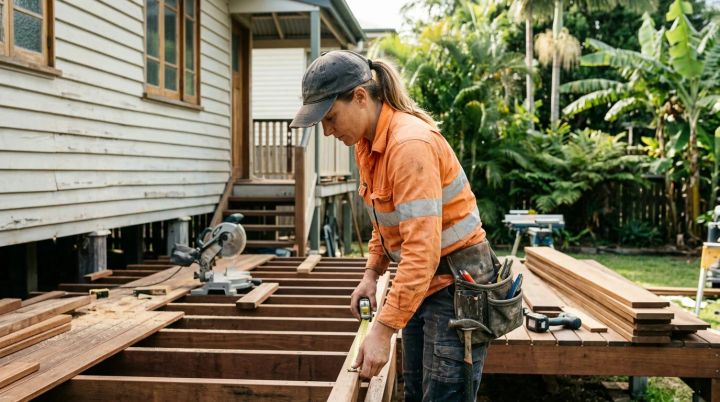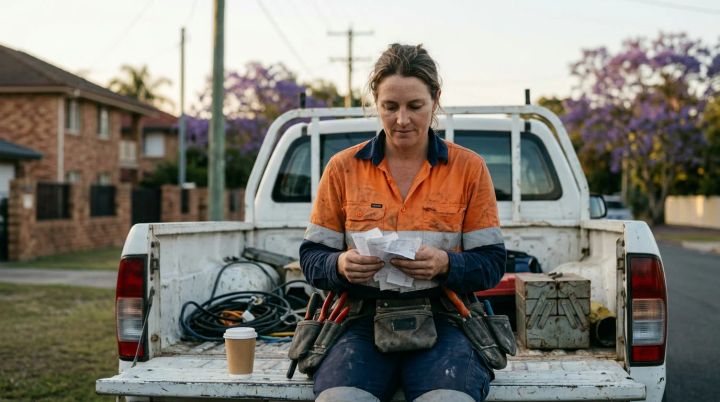

Boots that slop around at the heel. Gloves with a centimetre of empty fingertip. A hi-vis shirt that hangs off you like a tent, and a harness you've cinched as tight as it goes and it still isn't right. Plenty of women in the trades have spent years making do with men's small.
It isn't just uncomfortable. Gear that doesn't fit can stop protecting you and start causing accidents. Here's what the law says, what good fit looks like item by item, and how to get women's workwear that works as hard as you do.
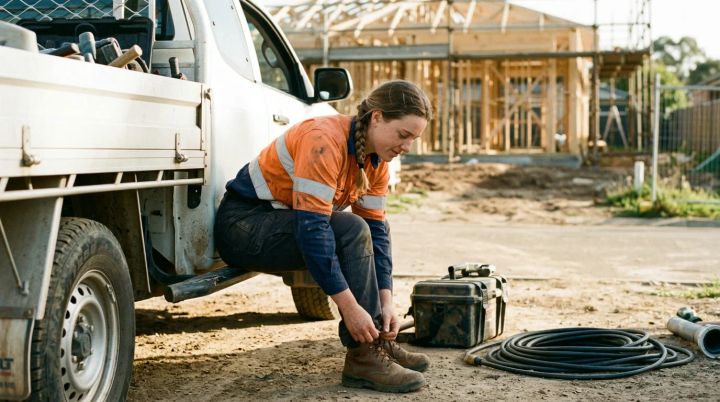
Key Facts: Women's Workwear and PPE
- Under Australia's model work health and safety laws, a business must provide PPE that fits properly and is reasonably comfortable for the worker wearing it.
- If you run your own business, choosing gear that fits is on you.
- Ill-fitting PPE creates its own hazards. A Canadian report found oversized boots left toes outside the steel cap and oversized gloves let sawdust in.
- Protective items such as steel-capped boots, gloves and safety-coloured vests can be tax deductible when they protect you against a real risk at work.
- Big workwear brands now make women's ranges, including women's safety boots, so men's small doesn't have to be the default.
Why Fit Is a Safety Issue, Not a Fashion One
PPE (personal protective equipment) only protects you if it sits where it's meant to. A steel cap does nothing if your toes sit behind it. Loose gloves cost you grip and feel on fine work, and baggy sleeves or trouser legs can catch on spinning tools and machinery.
A report from Ontario, Canada, found exactly these problems: goggles with gaps at the temples that let debris reach the eyes, oversized gloves that let sawdust in and made pinching more likely, and oversized boots that caused trips and left toes outside the steel cap. As one Australian safety manager put it in 2026, too many women are still issued equipment "designed on a male default".
What the Law Says About PPE Fit
Australia's model WHS (work health and safety) laws are clear on this. A business that provides PPE must choose gear that suits the worker and the task, fits properly and is reasonably comfortable. If a worker's PPE doesn't fit or is uncomfortable, the business has to help fix the problem. Workers, in turn, must wear it properly and report damage.
If you're employed, that means you can ask for gear in your size. If you run your own show, you're the business, so the choice, and the risk, sit with you.
The Fit Checklist: Item by Item
Item | Good fit looks like | Watch out for |
|---|---|---|
Safety boots | Toes sit fully behind the safety cap, heel stays put when you walk | Men's sizes that are too wide, heel slip, toes outside the cap |
Gloves | Fingertips reach the end, no bunching across the palm | Spare length at the fingertips that snags and costs you grip |
Hi-vis shirts and vests | Sits close without restricting movement, sleeves end at the wrist | Loose fabric and long sleeves that catch on tools |
Work pants | Room to kneel and squat, kneepad pockets line up with your knees | Kneepads that end up on your shins |
Hard hat | Harness adjusts to your head and stays put when you bend | A hat that tips forward over your eyes |
Eye protection | Sits close with no gaps at the sides | Gaps at the temples that let dust and debris in |
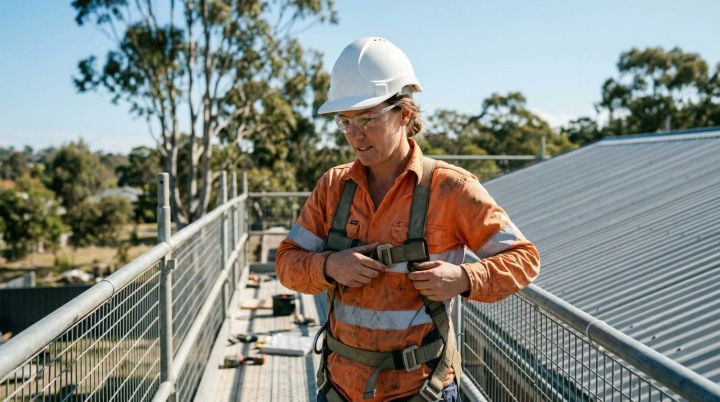
Harness | Adjusts snugly to your body as the manufacturer instructs | A harness that won't adjust small enough. Don't use it |
How to Buy Women's Workwear That Works
A few habits make a big difference:
Shop women's ranges first. Major workwear brands now make women's-cut pants, shirts and safety boots. A women's cut usually beats a men's small.
Try boots on with your work socks. And walk, crouch and climb a step or two before you buy.
Check the label. Look for the Australian or New Zealand Standard marking for that type of PPE, so you know it's rated for the job.
Replace worn gear. Stretched gloves and worn boots stop fitting, and stop protecting, long before they fall apart.
Can You Claim Workwear and PPE on Tax?
The ATO lets you claim protective clothing and footwear that protects you from a real and likely risk of injury or illness at work. Its examples include steel-capped boots, gloves and safety-coloured vests. Everyday clothes and plain enclosed shoes don't count, even if you wear them to work, and you need receipts.
If you're a sole trader, protective gear for your business is generally a business expense. Check the details with your accountant or tax agent.
The Verdict: Is It Time to Replace Your Gear?
Do this if
- You've been making do with men's small or borrowed gear
- Your heel lifts in your boots, or your toes don't sit fully behind the cap
- Your gloves leave spare fingertip or bunch across the palm
- Your harness or hard hat won't adjust to fit you properly
Don't do this if
- Your gear fits properly and is rated for the work you do
- It's in good condition and comfortable for a full day on the tools
Women's Workwear and PPE FAQs
Do women need different safety boots?
Not always, but many women find a women's-cut boot fits better than a small men's size. What matters is that your toes sit fully behind the safety cap and your heel doesn't slip.
Does my employer have to supply PPE that fits me?
Under Australia's model WHS laws, a business that provides PPE must choose gear that fits properly and is reasonably comfortable, and help fix it if it doesn't. If you run your own business, that duty sits with you.
Is PPE tax deductible?
Protective items like steel-capped boots, gloves and safety-coloured vests can be claimed when they protect you against a real risk at work. Keep your receipts and check with your accountant.
Where can I buy women's workwear in Australia?
Many workwear brands and trade workwear stores now carry women's ranges, including women's safety boots. Try before you buy where you can.
This article is general information, not safety, legal or tax advice. Check your PPE suits your specific work and talk to your accountant about claims.