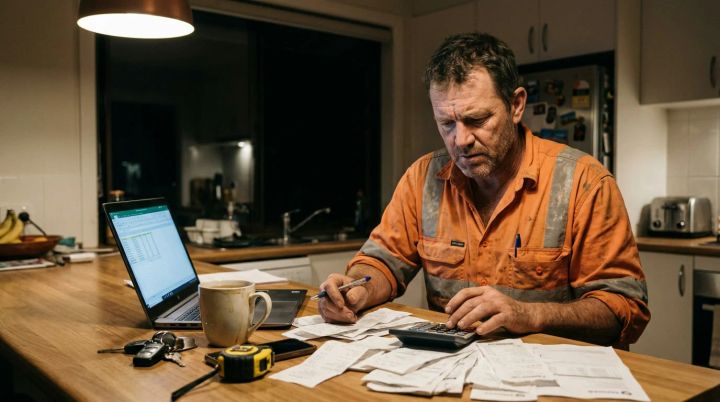

The job's done, the client was happy, and the invoice went out three weeks ago. Since then, nothing. Calls go to voicemail, texts get a thumbs up and no money. Meanwhile you've paid for the materials, paid your offsider and paid for the fuel to get there.
Chasing money is the worst part of the job, and most tradies either give up too early or go in too hard. Here's the step-by-step for getting paid in Queensland, which path fits your job, and how to stop it happening next time.
Key Facts: When a Client Won't Pay
- Most unpaid invoices get paid after a polite reminder and a firm, written letter of demand.
- QCAT handles minor debt claims up to $25,000 (excluding interest), designed to be used without a lawyer.
- For domestic building work for a homeowner, you must go through QBCC dispute resolution before QCAT, and QCAT has no monetary limit for those disputes.
- For commercial work, the Building Industry Fairness Act lets you make a payment claim and apply for adjudication, but not for domestic work for a homeowner living in the property.
- In Queensland you generally have six years to start court action to recover a debt.
Step by Step: What to Do When a Client Won't Pay
1. Ring them, then put it in writing
Start friendly. People forget, invoices go to junk mail, and partners assume the other one paid. A quick call saying "just checking you got the invoice" sorts out more debts than any lawyer. Then follow up by email or text, so you have a record of the date and what was said.
2. Send a firm reminder
If the due date passes, send a written reminder with the invoice attached, the amount, the due date and how to pay. Keep it short and business-like. No threats, no emotion, just the facts.
3. Send a letter of demand
Still nothing after a week or two? Send a formal letter of demand. It should state the amount owed, what it's for, the original due date, a final deadline (14 days is common) and what you'll do if it isn't paid, such as lodging a claim with QCAT. Write it as a proper letter, save it as a PDF and email it, so you have a dated record it was sent. If you want extra proof it arrived, post a copy by registered post too. Many clients pay at this point, because it shows you're serious and organised.

4. Pick the right path to recover it
Where you go next depends on who owes you and what the work was. Getting this wrong wastes weeks, so check the table below.
Who owes you | Where to go | What to know |
|---|---|---|
A homeowner living in the home, for domestic building work | QBCC dispute resolution first, then a QCAT domestic building dispute | QBCC can facilitate but can't order anyone to pay. Your contract must still be active for QBCC to help. QCAT needs QBCC's letter before it will take your application. |
A builder, developer or business, under a construction contract | A payment claim under the Building Industry Fairness Act, then adjudication through QBCC | Strict deadlines of 20 to 30 business days. Lodgement fees start at $68.77 for claims up to $11,345.70, plus the adjudicator's fees. |
Anyone else, for a debt up to $25,000 | A QCAT minor debt dispute | Claims over $1,500 go to mediation first. The other side can't counterclaim in this process. |
Anyone, for a larger debt that isn't a building dispute | Magistrates Court (up to $150,000) | Usually worth getting a lawyer at this point. |
If you're not sure whether your job counts as "building work", ring QBCC before you lodge anything. They'll tell you which process applies.
How to Stop It Happening Next Time
The best debt recovery is the debt you never have. A few habits make a big difference:
Put it in writing first. A written quote or contract with the price, payment terms and due date makes every later step easier.
Take a deposit, and break bigger jobs into progress payments, so you're never too far out of pocket. For domestic building work, check the QBCC rules on deposit limits first.
Invoice the same day. The longer you wait, the less urgent it feels to the client.
Make it easy to pay. Bank details, a payment link and a clear due date on every invoice.
The Verdict: Is It Time to Take Formal Action?
Do this if
- You've called, reminded and sent a letter of demand, and still nothing
- The client has stopped answering or keeps making excuses
- The amount is worth your time, and you have the quote, invoice and messages to prove it
- You're still within the deadlines for your path
Don't do this if
- You haven't sent a written reminder and letter of demand yet
- The client has raised a genuine problem with the work that you haven't dealt with
- The amount is so small that the time cost outweighs the debt (a firm phone call may do more)
Unpaid Invoice FAQs
How long do I have to chase an unpaid invoice in Queensland?
Generally six years from when the debt arose to start court action, under Queensland's limitation laws. Specific processes are much shorter, though. Building Industry Fairness Act adjudication has deadlines of 20 to 30 business days, so act quickly.
Can I take a homeowner to QCAT for an unpaid building job?
Yes, but for domestic building work you must go through QBCC's dispute resolution process first. QCAT needs the letter QBCC gives you at the end of it.
What's the most I can claim at QCAT?
Up to $25,000 (excluding interest) for a minor debt dispute. Domestic building disputes have no monetary limit at QCAT.
Do I need a lawyer to recover a debt?
Not for QCAT minor debt disputes, which are designed for people to run themselves. For larger amounts, court action or anything complicated, get advice from a solicitor or Legal Aid Queensland.
This article is general information, not legal advice. For advice on your situation, talk to a solicitor or Legal Aid Queensland.